
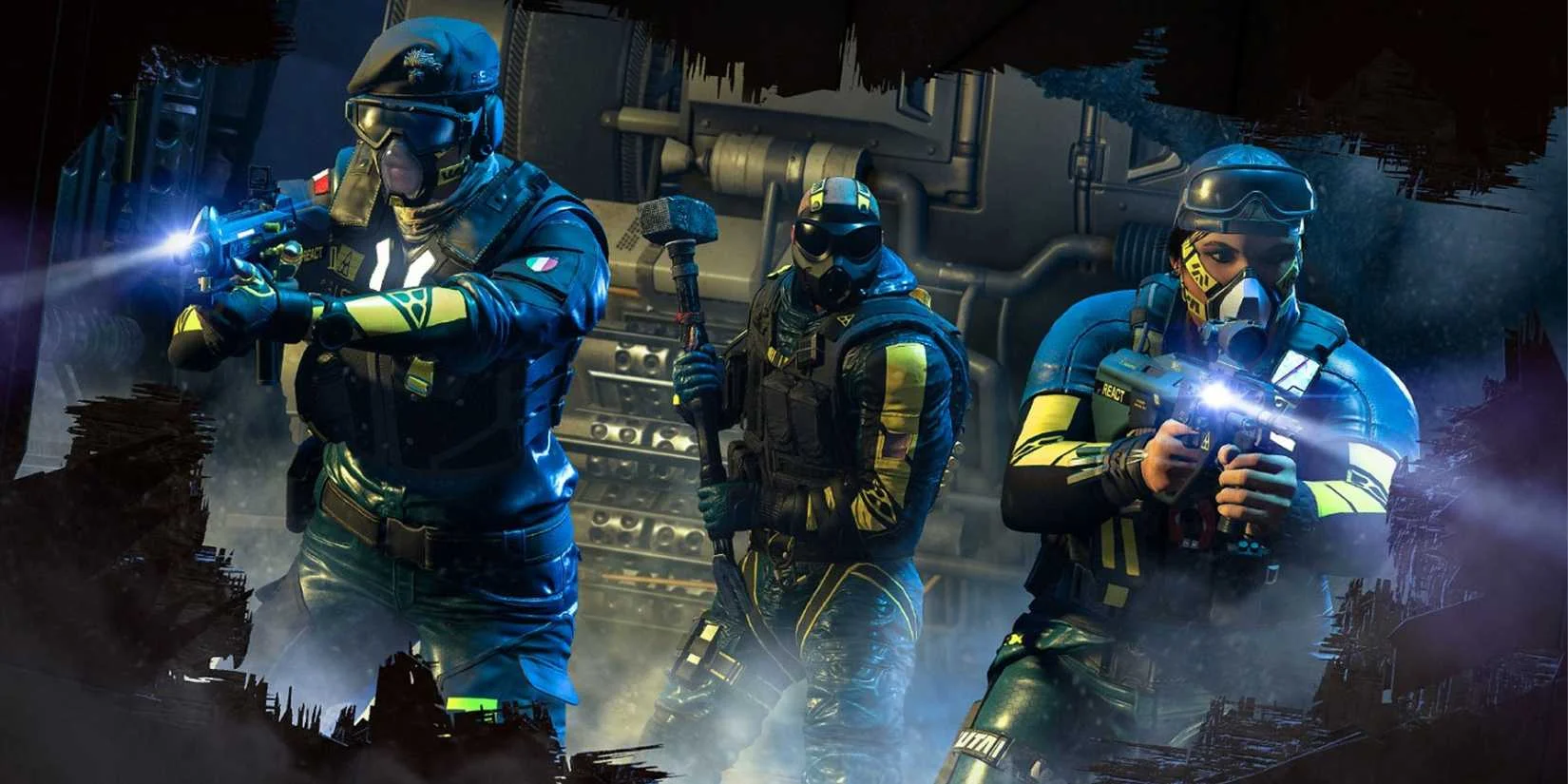
Rainbow Six Siege’s 10-Year Milestone Rekindles the Franchise’s Biggest Question: Should Single-Player Return?
A Decade In, Siege Faces an Opportunity It Never Expected
Ten years ago, Rainbow Six Siege launched under a cloud of skepticism—thin on content, unstable, and a dramatic departure from the series’ long-standing focus on tactical campaigns. What followed was one of the most surprising turnarounds in modern multiplayer history. Siege not only recovered; it became Ubisoft’s flagship competitive shooter, expanded its roster into dozens of operators with richly constructed backstories, and sustained one of the longest active lifespans in the FPS genre.
Now, as the game enters its second decade, the conversation inside the community has shifted. The question is no longer whether Siege will continue. Instead, it’s whether Ubisoft should use the foundation it has built to revive something Rainbow Six pioneered long before Siege’s esports era: narrative-driven single-player.
The Series’ Storytelling DNA Never Truly Went Away
Rainbow Six was once synonymous with meticulous, story-driven tactical operations. From the original squad-based classics to Rainbow Six 3 and the acclaimed Vegas games, narrative tension was woven deeply into the franchise’s identity.
That direction abruptly changed after the cancellation of Rainbow 6: Patriots, an ambitious cinematic campaign originally revealed in 2011. The project collapsed in development, but its remnants formed the conceptual bedrock of Siege’s early prototypes. What was meant to be a deeply scripted tactical thriller became a replayable multiplayer platform built around operators, destruction systems, and competitive tension.
Despite this pivot, narrative ambition never fully disappeared. Ubisoft has spent years producing character biographies, short animations, lore drops, and tie-ins like Rainbow Six Extraction. Siege may not have missions or cutscenes, but its characters have more written history than many full-scale campaigns.
That creates a paradox: one of the industry’s most story-rich competitive shooters has never actually told a story in traditional form.
Why Single-Player Is Back in the Conversation
When Siege creative director Alexander Karpazis and game director Joshua Mills speak about potential single-player projects, they’re not merely entertaining fan nostalgia. They are acknowledging an increasingly obvious truth: Ubisoft has spent a decade building an ensemble of characters too layered, too diverse, and too narratively intriguing to remain confined to purely competitive gameplay.
Mills hints at the creative potential: Siege is “one part of the story,” not the whole. Karpazis goes further, suggesting it would be a “shame” for the operator roster to never leave the multiplayer sandbox. These are not throwaway comments. They signal a strategic openness, even if nothing is officially in production.
This reflects a broader industry trend. Major shooters that leaned heavily into multiplayer—Call of Duty, Halo, Battlefield—have all circled back to campaign experiences after discovering that characters and world-building drive longevity just as much as mechanics.
Ubisoft may be arriving at the same conclusion.
The Operator Roster Is No Longer Just Gameplay—It’s a Cast
Siege launched with a small set of operators defined primarily by gadgets. Ten years later, it has a universe. Operators have histories, rivalries, personal arcs, national backgrounds, and thematic identities. Fans debate their motivations, not just their loadouts.
This depth has enabled:
-
cross-media storytelling
-
spinoff opportunities (as seen with Extraction)
-
long-form character investment
-
narrative retention—the same reason hero shooters thrive
In narrative design terms, Siege unintentionally built the scaffolding for a campaign without ever creating the campaign itself.
A single-player game—whether linear, tactical, or co-op—would allow Ubisoft to finally use this cast the way players imagine them: as protagonists, not just loadout bundles.
Historical Lessons from the Franchise’s Past
Rainbow Six has been here before. Vegas and Vegas 2 revitalized the brand in 2006–2008 by blending tactical planning with character-driven storytelling. Critics and fans praised their pacing, environmental intensity, and grounded espionage themes.
Those games didn’t just sell well—they became entry points for an entire generation of Rainbow Six fans. Many of today’s Siege players discovered the franchise through Vegas, not the classic PC titles.
As the industry revisits tactical single-player formats—Ghost Recon, Ready or Not, Zero Hour—a return to campaign storytelling could reconnect Rainbow Six with the broader tactical audience it once dominated.
Why Ubisoft Might Seriously Consider a New Single-Player Project
From a business standpoint, Siege has become an evergreen service. Its monetization is stable, its esports scene remains active, and its operator pipeline is predictable. But as service games mature, publishers often look outward to expand franchise reach.
A narrative-driven Rainbow Six project would:
-
tap into dormant audiences who never embraced PvP
-
leverage existing character investment
-
extend Ubisoft’s portfolio beyond service-only products
-
reduce dependence on Siege’s competitive ecosystem
Notably, several of Ubisoft’s recent franchises—Assassin’s Creed, Far Cry, Watch Dogs—have cycled between open-world formats and more focused narrative experiences. A tactical, character-centric Rainbow Six project would diversify their slate while reinforcing brand identity.
The Biggest Challenge: What Does “Single-Player” Even Mean Now?
If Ubisoft proceeds, it faces a creative fork.
A traditional linear campaign would satisfy long-time fans craving narrative closure. But Siege’s DNA suggests alternative directions:
-
small-squad tactical missions featuring mixed operator rosters
-
hybrid PvE/PvP narrative arcs
-
co-op story scenarios that evolve seasonally
-
a standalone cinematic project using Siege’s cast
Each direction respects the modern franchise while acknowledging what old-school Rainbow Six players loved.
Community Impact: Why the Idea Resonates So Strongly
The enthusiasm for a return to single-player isn’t just nostalgia. Many Siege players enjoy the competitive tension but long for structured missions that let them explore operators’ personalities. Others simply love the world Ubisoft has built and want something slower, more story-driven, and less punishing than ranked play.
New players—especially those who feel intimidated by Siege’s skill gap—could treat a campaign as an onboarding pathway. That alone would be a massive strategic benefit.
What the Future Might Hold
The directors give cautious, noncommittal answers, but the meaning is clear: the door is open. Ubisoft is watching player demand, evaluating opportunities, and aware that the franchise’s next decade cannot rest solely on competitive multiplayer.
If Siege’s past ten years were about proving a service model could evolve into a global success, the next ten may be about broadening Rainbow Six beyond the confines of that model.
Whether through a campaign, a tactical co-op spin-off, or something entirely unexpected, Rainbow Six is positioned for reinvention—and this time, the story may finally return to the spotlight.
