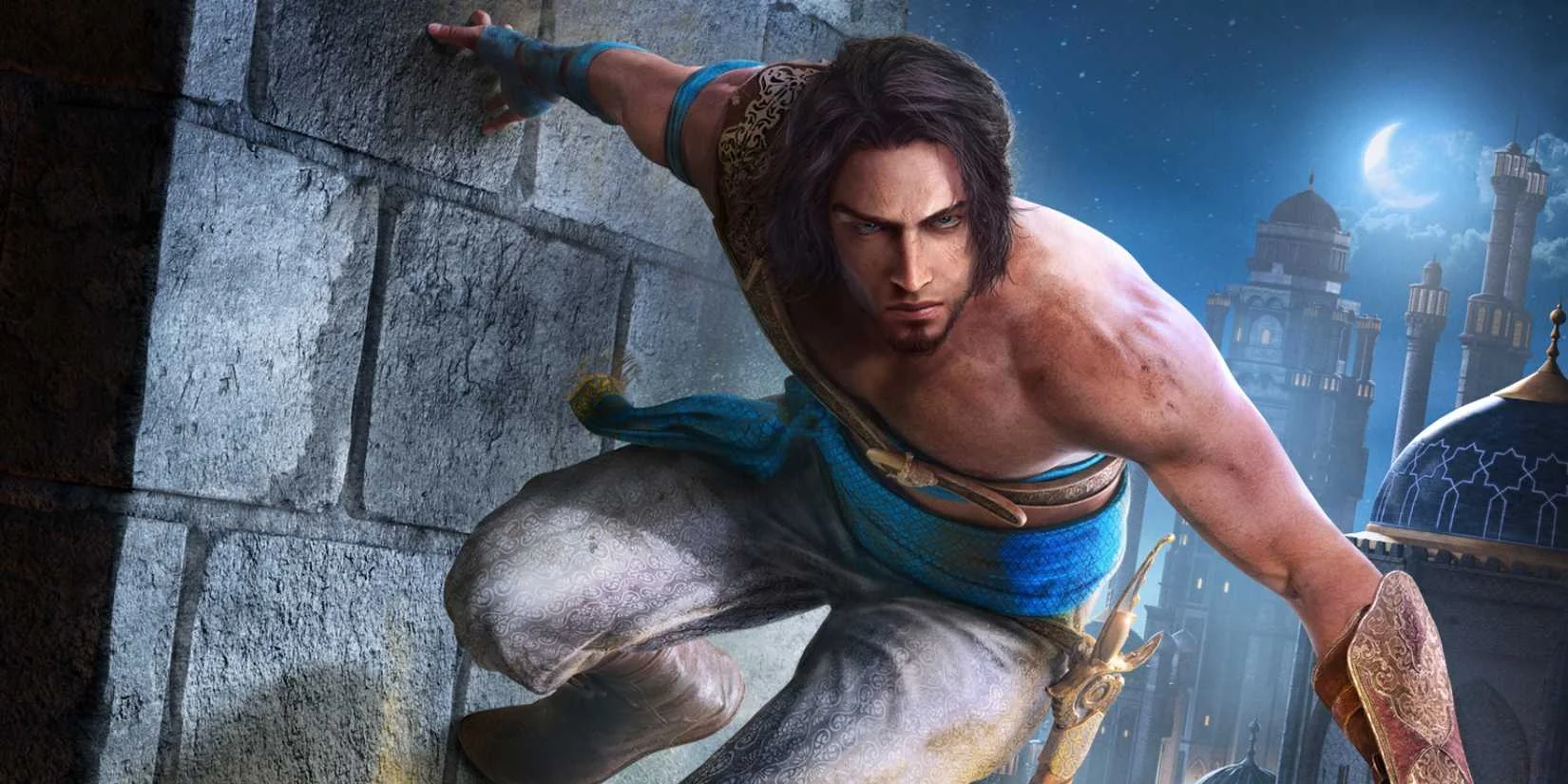
Ubisoft’s Prince of Persia Cancellation Exposes a Company at a Strategic Crossroads
The quiet cancellation of Prince of Persia: The Sands of Time Remake is more than the loss of a single nostalgic project. It is a visible fracture line in Ubisoft’s long-running struggle to balance legacy franchises, modern production realities, and an increasingly unforgiving AAA market.
Alongside the Prince of Persia remake, multiple other projects have reportedly been shelved or delayed, including a long-rumored remake of Assassin’s Creed IV: Black Flag. The scale of these decisions makes one thing clear: this is not a routine course correction. It is structural.
For players, the news feels abrupt. For industry observers, it feels inevitable.
A Franchise That Became a Test Case
Prince of Persia once stood at the center of Ubisoft’s identity. The Sands of Time trilogy in the early 2000s didn’t just define an era of action-adventure games; it laid mechanical groundwork that later evolved into Assassin’s Creed itself.
But that lineage has always worked against the franchise in modern times. As Assassin’s Creed grew into Ubisoft’s flagship, Prince of Persia was gradually sidelined, resurfacing only intermittently through mobile titles or experimental spin-offs.
The remake announced in 2020 was supposed to correct that imbalance. Instead, it became a test case for whether Ubisoft could successfully revisit its past without being trapped by it.
From the moment early footage surfaced, the project struggled under scrutiny. Visual quality, animation fidelity, and perceived production value clashed with expectations for a modern remake of such a revered title. The subsequent delays were framed as course correction, but the underlying issue never changed: Ubisoft appeared uncertain about why this remake needed to exist beyond nostalgia.
That uncertainty ultimately proved fatal.
The Deeper Problem With AAA Remakes
The cancellation highlights a growing problem across the industry: remakes are no longer guaranteed wins.
A decade ago, modernizing a classic came with built-in goodwill. Today, audiences expect remakes to justify themselves mechanically, visually, and creatively. Anything less is judged harshly and often publicly.
For Ubisoft, the challenge is amplified by scale. Large internal teams, distributed development across studios, and rigid production pipelines make “small” remakes disproportionately expensive. When a project enters extended iteration cycles without a clear creative north star, it quickly becomes a financial liability.
Prince of Persia was caught in that exact trap:
-
too iconic to release in a compromised state
-
too costly to endlessly rework
-
too risky to reposition as a smaller project
Canceling it may be painful, but from a portfolio perspective, it removes a long-running uncertainty from Ubisoft’s balance sheet.
Ubisoft’s Restructuring Is About Focus, Not Failure
The reported cancellation of multiple unannounced projects and the delay of others point to a broader internal recalibration.
Ubisoft is no longer chasing breadth. It is consolidating around fewer, safer pillars.
Over the past several years, the company has leaned heavily into:
-
live-service ecosystems
-
long-tail franchises with predictable engagement
-
scalable monetization models
In that context, traditional single-player remakes occupy an awkward middle ground. They demand AAA investment without offering ongoing revenue streams or ecosystem lock-in.
Even Prince of Persia: The Lost Crown, a critically respected and creatively confident release, reportedly failed to meet commercial expectations. That outcome likely reinforced internal skepticism toward niche prestige projects, no matter how well-reviewed.
The message from leadership appears clear: critical success alone is no longer enough.
The Black Flag Delay and the Weight of Expectations
The reported delay of an Assassin’s Creed IV: Black Flag remake further illustrates Ubisoft’s caution.
Black Flag occupies a unique space in the Assassin’s Creed catalog. It is remembered not just fondly, but distinctly, for its naval systems, exploration freedom, and tonal shift. A remake that fails to modernize these elements meaningfully would risk damaging one of the brand’s most enduring reputations.
By delaying it, Ubisoft avoids repeating the Prince of Persia scenario: launching a remake that satisfies neither nostalgia nor modern standards.
This suggests a shift from aggressive release scheduling toward selective patience — a notable change for a publisher long criticized for oversaturation.
Community Impact Trust Erosion and Fragmentation
For players, these cancellations deepen an ongoing trust issue.
Prince of Persia fans endured years of silence, reversals, and ambiguous messaging. Each delay raised hope that the extra time would result in something exceptional. The final outcome — cancellation — retroactively reframes those years as emotional sunk cost.
More broadly, Ubisoft’s audience is increasingly fragmented:
-
legacy fans waiting for dormant franchises
-
Assassin’s Creed players navigating constant evolution
-
live-service players tied to ongoing ecosystems
Each group now views announcements with skepticism. Until projects are firmly in players’ hands, nothing feels guaranteed.
That erosion of confidence has long-term consequences for preorders, community goodwill, and early adoption — metrics Ubisoft historically relied upon.
A Historical Parallel Ubisoft Has Been Here Before
This moment echoes Ubisoft’s late-2010s reset following franchise fatigue and internal culture criticism.
Then, the solution was reinvention: reworking Assassin’s Creed, delaying major releases, and restructuring internal leadership. The result was a commercially revitalized slate, but also a heavier reliance on predictable formulas.
What’s different now is market pressure. Development costs have ballooned. Player tolerance for half-measures has evaporated. Live-service failures have become expensive cautionary tales rather than growth engines.
Ubisoft’s current retrenchment feels less like experimentation and more like consolidation for survival.
System-Level Reality Why These Decisions Happen Now
At a technical and organizational level, cancellations like this are rarely about a single project’s quality.
They emerge when:
-
projected revenue no longer offsets remaining development cost
-
team reallocation promises higher ROI elsewhere
-
internal tools or engines fail to scale efficiently across project types
Ubisoft’s proprietary tech stack and distributed studio model excel at large, repeatable frameworks. They struggle with bespoke, tightly scoped creative projects that rely on polish rather than scale.
Prince of Persia required intimacy. Ubisoft is optimized for magnitude.
Future Risks and What Comes Next
The immediate risk is perception. Canceling legacy projects reinforces the narrative that Ubisoft is abandoning its creative roots in favor of safer commercial bets.
The longer-term risk is stagnation. Over-reliance on a handful of evergreen franchises leaves little room for surprise hits or cultural moments. Without controlled creative risks, portfolios calcify.
However, there is also opportunity.
If Ubisoft successfully narrows its focus, improves quality control, and aligns project scope with audience expectations, future releases may arrive with greater confidence and cohesion.
The lesson from Prince of Persia is not that nostalgia is unviable. It is that nostalgia without conviction is expensive.
The End of One Remake and the Start of a Reckoning
The cancellation of Prince of Persia: The Sands of Time Remake is not just the end of a project fans waited years to play. It is a mirror held up to Ubisoft’s evolving identity.
This is a publisher reassessing what it can afford creatively, financially, and culturally. The outcome will define whether Ubisoft remains a curator of gaming history or becomes solely a steward of scalable brands.
For now, one thing is certain: the era of safe remakes is over. Only projects with a clear reason to exist will survive.