Title Update 4 Feels Like a Reckoning, Not a Routine Patch
Monster Hunter Wilds has spent most of its post-launch life in a tug-of-war between ambition and stability. The core loop—learn the monster, build the set, chase the perfect roll—was always going to land with series loyalists. The problem was everything around it: uneven performance (most loudly on PC), a perception of thin endgame legs at launch, and the creeping worry that Wilds was going to need a full expansion just to feel fully “there.”
Title Update 4 is Capcom’s loudest attempt yet to change that conversation. Not because it drops a single flashy headliner, but because it tries to touch almost every pressure point at once: endgame targets, weapon feel, social systems, UI friction, and the kind of under-the-hood optimization you can’t screenshot for a trailer—yet absolutely determines whether players stick around.
The update’s biggest gamble is simple: it’s asking the audience to believe again.
Context: Monster Hunter’s Post-Launch History Sets a High Bar
Capcom has trained Monster Hunter players to expect two things in the modern era: a strong foundation and a long tail. World didn’t become a phenomenon purely because of its launch content; it became a lifestyle game because the cadence of monsters, events, and quality-of-life polish kept the community engaged long enough for mastery to feel rewarding.
When Wilds arrived, it carried that expectation—and the backlash that comes when a flagship release doesn’t immediately meet it. In older Monster Hunter games, rough edges were part of the bargain. Today, on PC especially, they’re interpreted as broken promises.
That’s why this patch matters. It doesn’t just add content; it attempts to pay down technical debt while raising the ceiling for high-rank play. Historically, the series has succeeded when it makes the “next hunt” feel both achievable and meaningful. Wilds needed that back.
The Headliner Matters: Gogmazios as an Endgame Statement
Why Gogmazios Is More Than a Trophy Fight
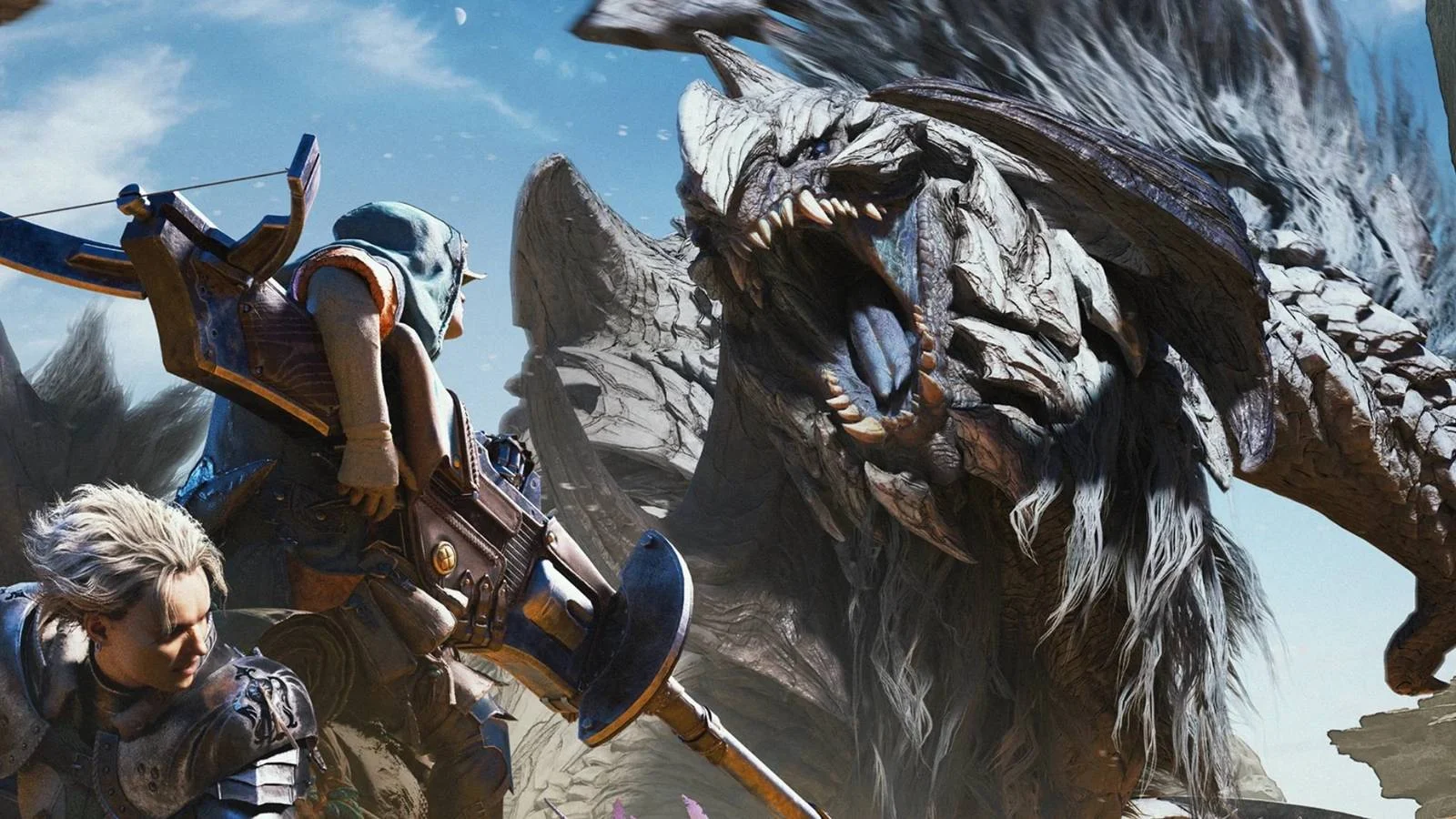
Gogmazios isn’t a casual addition. An Elder Dragon of that scale signals an endgame pivot toward spectacle and sustained challenge, not just another monster to farm once and shelve. Gating it behind Hunter Rank 100+ also sends a clear message: this is meant to be content for players who’ve already internalized Wilds’ systems and are hungry for something that pushes loadouts, team coordination, and stamina management harder than the standard rotation.
Capcom also didn’t just drop a monster and call it a day. The patch folds in adjacent systems—weapon reinforcement options tied to the new gear track, armor upgrade pathways, and broader tempered monster support. This is how the best Monster Hunter updates feel: one addition radiates outward into the crafting and progression ecosystem.
Tempered Expansion Is the Real Endgame Fuel
Tempered monsters—especially higher-star targets—are the backbone of a grind that feels skill-driven rather than purely time-gated. Adding more high-tier tempered options and expanding where they appear (including roaming behavior tied to HR thresholds) is a direct answer to the “what do I do now?” problem.
If Wilds’ endgame felt narrow, this is Capcom widening the lanes.
The Technical Story: Optimization as a Design Feature, Not a Patch Note
The most consequential line in Title Update 4 isn’t a monster name—it’s the promise of broad CPU/GPU optimization and a massive pile of targeted performance improvements across players, monsters, UI, effects, NPCs, and more.
What That Actually Means in Practice
When a game says it’s “reviewing collision detection,” “reducing simultaneous effects,” and “eliminating unnecessary processing,” that’s not marketing fluff—it’s the boring work that decides whether hunts feel clean or sloppy.
In Monster Hunter specifically, performance issues don’t just look bad; they distort the game’s timing.
-
Frame pacing and input response determine whether a Perfect Guard feels like mastery or like the game ignored you.
-
Effects load matters because Wilds is a screen-busy game: particles, hit sparks, environmental systems, and monster telegraphs all overlap.
-
Collision and simulation costs scale with the chaos of multiplayer, where four players, Palicoes, mounts, and monster state changes can turn a smooth hunt into a stuttery mess.
Capcom also addressed a quality-of-life edge case that sounds small but matters: keeping movement and camera control available during certain communication error messages. That’s a tacit admission that the game’s “feel” was being disrupted by system-level interruptions—exactly the kind of thing that makes a hunt feel unfair.
Weapon and Combat Adjustments: Smoothing the Skill Curve Without Flattening It
Title Update 4 takes a broad brush to weapons: damage scaling changes, faster chains out of Perfect Guard reactions, hitbox tweaks, gauge economy improvements for bowguns, and a long list of fixes that target “why does this feel off?” complaints that only emerge after hundreds of hunts.
The theme here isn’t power creep for its own sake. It’s friction reduction.
-
Buffs to core moves like charged slashes, thrust chains, and ranged responsiveness suggest Capcom wants more weapons to feel viable without forcing players into a narrow meta.
-
Expanding the practical usefulness of Perfect Guard follow-ups reinforces the game’s skill expression while making defensive play feel less punishing.
-
A slew of control-type fixes indicates Capcom is still sanding down the rough corners of input interpretation—again, especially important on PC setups with varied devices.
This is the kind of tuning that doesn’t excite casual headlines but absolutely shapes the long-term health of the game.
Impact on Players: PC Confidence, Endgame Momentum, and Multiplayer Flow
PC Players: The Patch That Has to Prove Itself
Wilds’ PC audience has been burned before—especially when prior updates introduced content without meaningfully improving platform-specific performance. That makes Title Update 4 a credibility test, not a content drop. If the optimization work translates into steadier frame pacing and fewer hitchy moments during high-effects hunts, it could stabilize the PC population. If it doesn’t, the community will treat the patch notes as theater.
Veterans: More Reasons to Log In
High-rank players get what they’ve been asking for: tougher targets, more tempered variety, and better sorting/management tools for the endless cycle of investigations, builds, and farming routes.
Everyone: Less Menu Wrestling
A huge portion of this update is UI, sorting, and workflow. That sounds mundane until you remember Monster Hunter is a game you play partly in menus—loadouts, smithy upgrades, quest selection, rewards management. Every second saved there becomes more time hunting, and more importantly, less time feeling annoyed.
Future Outlook: A New Standard Capcom Can’t Walk Back
Title Update 4 is big enough to reset expectations. That’s both good and dangerous.
If this becomes the new baseline, smaller updates will feel worse by comparison. If Capcom can’t maintain this level of systemic polish, the community will interpret it as another spike-and-dip support cycle.
There’s also a balance risk: widespread buffs and smoothing changes can unintentionally compress weapon identity if not monitored. Monster Hunter thrives when each weapon feels like a distinct discipline, not a reskinned DPS tool.
Still, as a statement of intent—endgame expansion plus technical stabilization—this is the strongest sign yet that Capcom understands what Wilds needed after a rocky start. Now it has to stick the landing where it matters most: moment-to-moment performance during real hunts, on real hardware, with real players pushing the systems to their limits.