
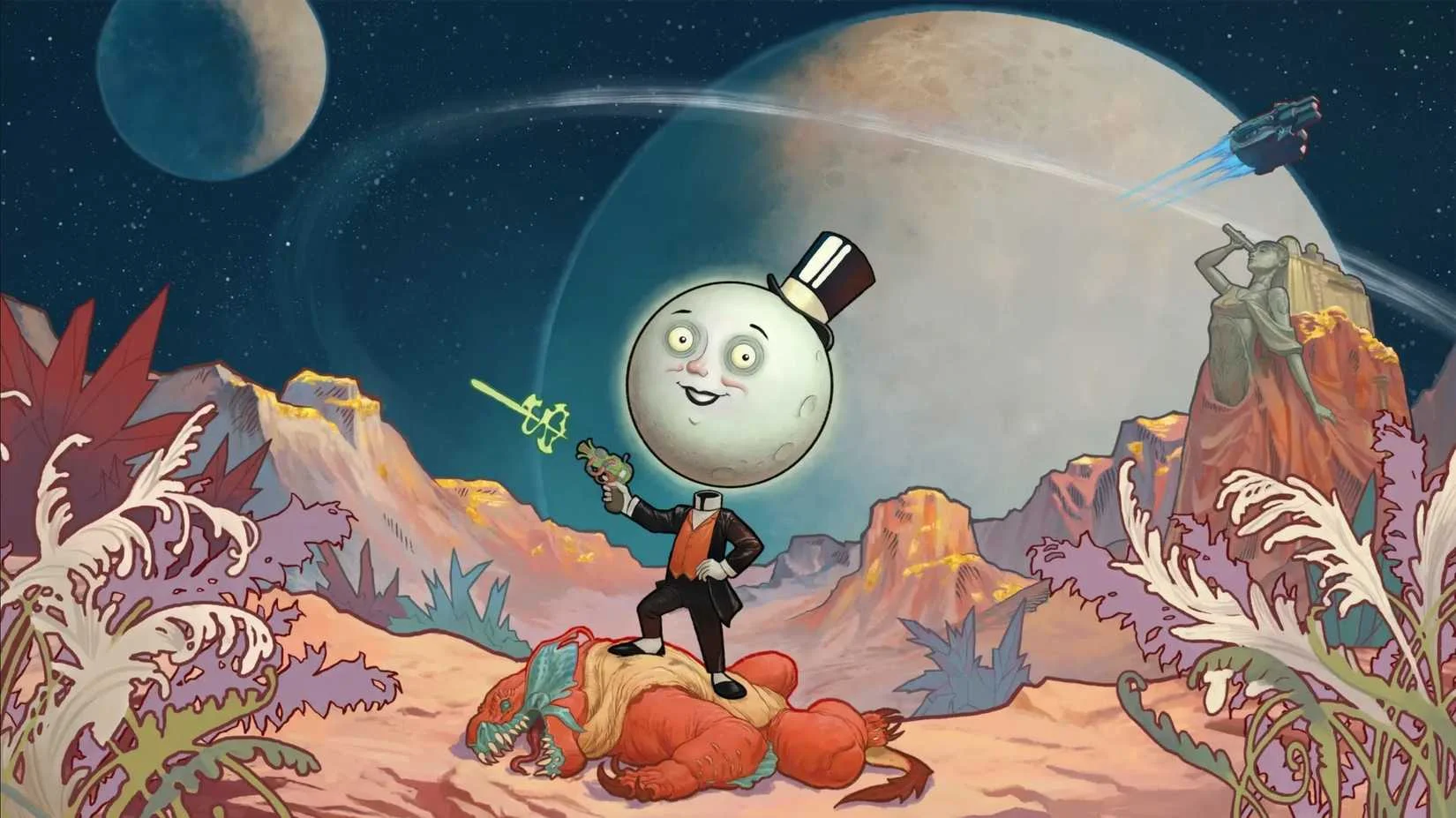
In the latest wave of gaming industry drama, Kingdom Come: Deliverance 2 director Daniel Vávra has stirred conversation online after making pointed remarks about The Outer Worlds 2 and its developer, Obsidian Entertainment. While he acknowledged enjoying parts of the sci-fi RPG, Vávra criticized the game for what he sees as a lack of innovation and overreliance on well-worn design formulas.
Vávra, known for his outspoken presence on social media, didn’t hold back when discussing The Outer Worlds 2. His comments quickly went viral, drawing both support and backlash from the gaming community. Many praised his honesty, while others accused him of being unnecessarily confrontational.
🎮 Daniel Vávra’s History and Reputation
For those unfamiliar, Daniel Vávra is a prominent Czech game designer and co-founder of Warhorse Studios, the studio behind the acclaimed Kingdom Come: Deliverance series. Before that, he worked on the Mafia franchise, including the original Mafia and Mafia II, both of which gained critical praise for their storytelling and realism.
Vávra has built a reputation not only for his passion for immersive, historically grounded games but also for his unfiltered opinions on the state of modern game design. Over the years, he has made headlines for calling out industry trends he feels are repetitive, over-commercialized, or creatively stagnant.
Earlier this year, he defended Kingdom Come: Deliverance 2 against negative early reviews, arguing that “realistic simulation doesn’t have to mean boring gameplay.” His social media commentary often sparks fierce debate, and his most recent critique of The Outer Worlds 2 is no exception.
🌌 Vávra’s Criticism of The Outer Worlds 2
In a recent post on X (formerly Twitter), Vávra compared The Outer Worlds 2 unfavorably to classic Fallout titles, calling Fallout: New Vegas one of his favorite RPGs of all time. He said that while Obsidian’s latest effort looked visually impressive, it felt too “static and scripted,” failing to deliver the depth or dynamism that made its predecessors special.
“It’s sad,” Vávra wrote, “that after 15 years and with all of Microsoft’s money and modern tech, Obsidian still hasn’t come up with a single new game mechanic to take this proven but ancient formula somewhere new.”
He elaborated further, criticizing The Outer Worlds 2 for its use of conventional systems — loot boxes, level grinding, and frequent loading screens — instead of building a living, simulated world with true non-linear gameplay.
According to Vávra, the game’s structure feels overly controlled, with environments that look vibrant but lack interactivity. “Everything feels pre-scripted,” he added, “as if you’re walking through a theme park instead of an actual world.”
🧩 A Debate About Innovation in Modern RPGs
Vávra’s comments reflect a broader discussion about the state of creativity in AAA gaming. Many players agree that while modern RPGs often boast cinematic storytelling and high production values, they rarely take meaningful risks when it comes to gameplay mechanics.
Games like The Outer Worlds 2 — praised for their polish and charm — are sometimes accused of playing it safe by sticking to established RPG formulas.
Vávra contrasted this with his own design philosophy at Warhorse Studios. In Kingdom Come: Deliverance and its sequel, Vávra’s team emphasized simulation-driven systems, where player actions have realistic, emergent consequences. From hunger mechanics to complex NPC schedules, the Kingdom Come series attempts to recreate a believable medieval world with minimal “gamey” abstraction.
In his eyes, games like The Outer Worlds 2 are designed for accessibility rather than authenticity — a trade-off he finds disappointing.
💬 Community Response: Divided Opinions
Unsurprisingly, Vávra’s post quickly ignited debate across gaming circles. On Reddit, Twitter, and YouTube, players weighed in with their own takes on his remarks.
Many fans of Kingdom Come: Deliverance agreed with Vávra’s critique, applauding him for challenging what they see as complacency in the RPG genre.
“He’s not wrong,” one Reddit user wrote. “Most big-budget RPGs now feel like the same game with different paint. I’d rather have something rough but fresh like Kingdom Come than a polished copy of Fallout.”
Others, however, pushed back against the idea that The Outer Worlds 2 lacks creativity. Some argued that Obsidian’s focus on writing and player choice is its form of innovation, and that not every game needs to reinvent the wheel to be worthwhile.
“Obsidian games are about narrative freedom,” one player countered. “Not every RPG has to be a sandbox simulation like Kingdom Come. Different goals, different strengths.”
The discussion soon evolved into a broader argument about what constitutes innovation in gaming — whether it lies in mechanics, storytelling, or presentation.
📊 Critical Reception and Player Reviews
Despite Vávra’s criticism, The Outer Worlds 2 has performed well with both critics and players. As of early October, the game holds an 88% critic score on OpenCritic and a 90% player satisfaction rating, with reviewers praising its dialogue, humor, and expanded quest design.
However, even among positive reviews, some critics echoed aspects of Vávra’s critique. Several noted that while The Outer Worlds 2 improved on its predecessor, it still played things too safe, offering little evolution in terms of world systems or gameplay complexity.
One review summarized the sentiment neatly:
“It’s smart, funny, and entertaining — but it doesn’t surprise you. It’s more Outer Worlds, for better or worse.”
🧠 Obsidian Entertainment: A Veteran Studio Under Pressure
Obsidian Entertainment is one of the most respected names in RPG development, known for classics like Fallout: New Vegas, Pillars of Eternity, and Knights of the Old Republic II.
Since being acquired by Microsoft, the studio has worked on multiple projects simultaneously — including Avowed and The Outer Worlds 2. With Game Pass now a major part of Xbox’s business model, there’s growing pressure for developers like Obsidian to create broadly appealing, streamlined titles that attract large audiences while fitting subscription-based release schedules.
Some of Vávra’s supporters suggested that these corporate pressures may have influenced The Outer Worlds 2’s design choices. One commenter noted:
“It’s not just Obsidian. When your game has to fit into Game Pass, you’re not encouraged to take creative risks. You’re encouraged to deliver safe, marketable fun.”
⚔️ Kingdom Come vs. The Outer Worlds: Two Philosophies Collide
Comparing Kingdom Come: Deliverance 2 to The Outer Worlds 2 highlights two very different design ideologies.
-
Kingdom Come: Deliverance 2 emphasizes realism, simulation, and player accountability. Every decision affects the game world, and systems like hunger, sleep, and social reputation add tangible weight to the experience.
-
The Outer Worlds 2, on the other hand, embraces stylized science fiction and witty storytelling, prioritizing accessibility and humor over strict realism.
Both approaches have their fans — but Vávra’s comments suggest he believes the industry is leaning too heavily toward safe, predictable formulas instead of pushing the boundaries of interactivity.
🔥 Vávra’s Comments Continue to Spark Conversation
In the days following his post, gaming journalists and developers weighed in. Some accused Vávra of being unnecessarily combative or disrespectful toward fellow creators. Others argued that his blunt honesty is exactly what the industry needs — a reminder that constructive criticism and creative debate are vital for innovation.
Even though The Outer Worlds 2 and Kingdom Come: Deliverance 2 cater to very different audiences, Vávra’s critique reignited an important conversation about the balance between polish and experimentation in AAA development.
As one fan summarized on social media:
“You don’t have to agree with Vávra, but you can’t deny he’s asking the right question: Why are so many big games afraid to evolve?”
🕹️ The Broader Implications for Game Design
At its core, Vávra’s critique raises a timeless question — should developers prioritize innovation or refinement?
Games like The Outer Worlds 2 demonstrate that familiar mechanics can still work when executed well, while projects like Kingdom Come show that risk-taking can lead to both critical success and divisive reactions.
In truth, both approaches have value. The key may lie in finding a middle ground — one where studios respect proven systems but aren’t afraid to experiment within them.
Whether one agrees with Vávra or not, his comments have undeniably reignited discussions about creativity, risk, and the evolving identity of role-playing games in the modern era.