Saros’ Delay Reveals PlayStation’s 2026 Strategy—and Why Housemarque Isn’t Taking Any Chances
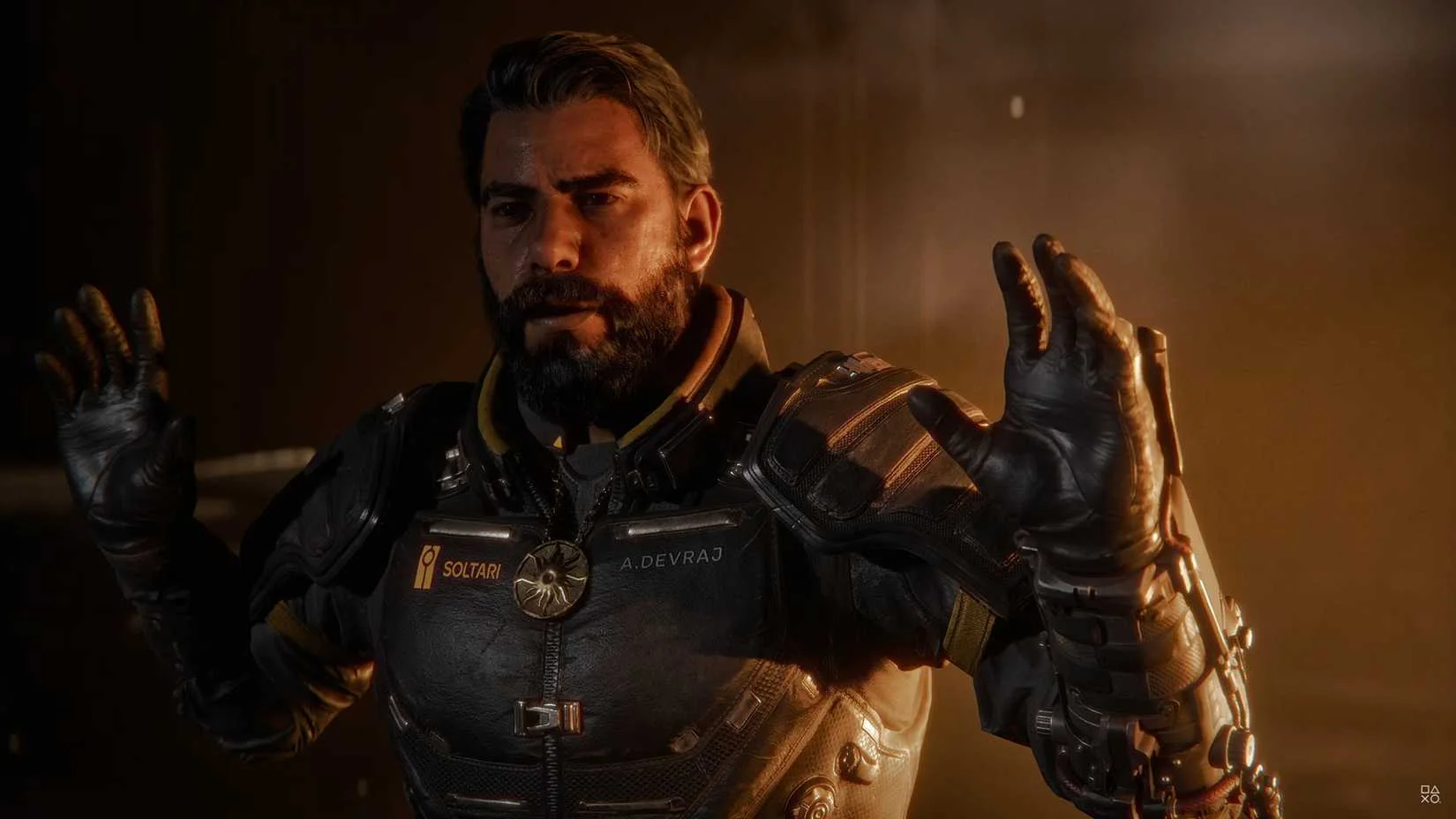
Few PS5 exclusives have generated as much sustained curiosity as Saros, Housemarque’s spiritual successor to Returnal. The game’s newest trailer at The Game Awards delivered exactly what fans wanted: extended bullet-hell sequences, a sharper look at the alien world of Carcosa, and the growing psychological intensity surrounding Arjun Devraj’s mission.
But it also delivered something else—something inevitable, in hindsight: a delay. Saros will no longer launch in March 2026. Instead, Housemarque has pushed the release to April 30, extending its development runway by just one month. On paper, that’s nothing. Strategically, it reveals something much bigger.
Housemarque’s Post-Returnal Identity: Prestige, Risk, and Precision
Returnal fundamentally changed Housemarque’s status. The studio went from “the arcade specialists who might close down” to “the team behind one of PlayStation’s most acclaimed exclusives.” Saros inherits that weight—and that risk.
Saros shows signs of an even more ambitious vision:
-
a more conventional narrative lead
-
performance capture anchored by Rahul Kohli
-
a structured third-person shooting framework
-
Housemarque’s signature chaos, but navigated through an open, dripping-with-lore alien world
That blend is far harder to tune than Returnal’s rogue-lite structure. The one-month delay might seem minor, but it tells us this is not a studio willing to replicate Returnal wholesale. They’re refining something complex.
The decision to delay instead of “crunch through it” is a signal: Housemarque wants Saros judged in the same breath as PlayStation’s prestige lineup, not just as an elevated arcade shooter.
A New Look at Carcosa—and What It Says About the Game’s Ambition
The Game Awards trailer wasn’t just a marketing beat. It was a technical statement.
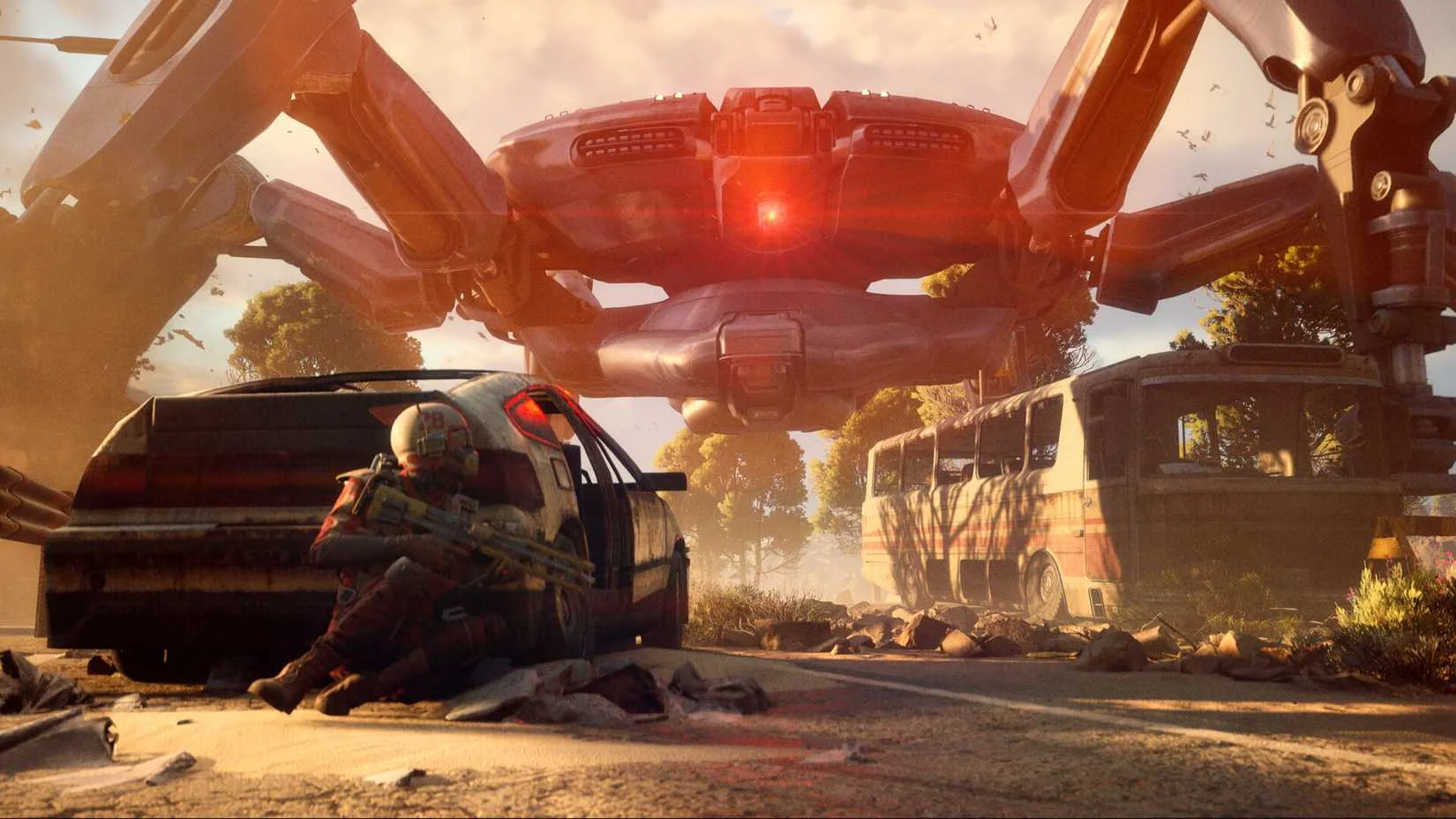
Carcosa’s geometry, lighting, enemy interactions, and projectile logic demonstrate a world constructed around motion and constant threat. Devraj’s squadmates are another major shift: Returnal was solitary by design, while Saros introduces interpersonal conflict and factional tension within the Soltari unit.
That’s a big escalation. NPCs bring:
-
more cinematic pacing
-
more narrative obligations
-
more animation and performance work
-
more opportunities for emergent story moments
In other words: far more polish required.
Housemarque’s delay becomes even more understandable when you factor in the heavy layering of particle systems, shield mechanics, and patterns of enemy projectiles. Everything shown is dense. Everything depends on frame-perfect legibility.
One mistake—an unreadable attack pattern, an unfair projectile cluster, a camera miscue—and Housemarque risks players labeling Saros as “unbalanced” or “chaotic in the wrong ways.”
April 30 gives them crucial breathing room.
What the Delay Signals About PlayStation’s 2026 Calendar
Sony has a pattern: first-party exclusives don’t compete against each other unless absolutely necessary. A March release for Saros would’ve placed it right at the front of the year, potentially conflicting with other PS5 or PS VR2 titles planned for Q1.
Moving Saros to late April accomplishes several goals:
1. It fills a growing mid-spring gap.
Sony’s 2026 lineup has several titles still unannounced publicly. Moving Saros gives PlayStation a clean anchor for that period.
2. It avoids overlapping with third-party heavy hitters.
March is notoriously crowded across platforms. April often isn’t.
3. It gives the game clearer marketing oxygen.
A PS5 exclusive releasing after the Game Awards hype cycle risks being drowned out. Moving it positions Saros closer to next year’s pre-summer showcase window.
This isn’t accidental timing. It’s strategic placement.
Pre-Order Bonuses Reveal Sony’s Cross-Brand Alignment
Sony is increasingly leaning into cross-franchise identity building. The Digital Deluxe edition of Saros includes armor sets referencing:
-
Returnal
-
Ghost of Yotei
-
God of War
This is more than fan service. It’s part of a larger PlayStation ethos: unify the first-party catalog visually and thematically. If Saros succeeds in becoming a new tentpole, these cross-franchise items serve as early onboarding cues, linking it to other high-production-value PlayStation worlds.
Sony used similar strategies with Horizon and God of War cosmetics in earlier multiplayer projects. It’s a subtle reinforcement: Saros belongs to the “prestige family.”
Gameplay Mechanics: Where Returnal’s DNA Evolves Instead of Repeats
Housemarque is clearly resisting Returnal 2. Instead, Saros takes Returnal’s sensibilities and translates them into a more structured action shooter.
Key new mechanics include:
-
Soltari Shield – absorbs projectiles and powers Devraj’s weapon
-
Expanded traversal systems – designed for both defensive escapes and offensive positioning
-
Squad interactions – affecting moment-to-moment narrative beats
-
Multi-layer bullet hell patterns – denser, more theatrical than Returnal’s
The shield mechanic is especially important. It changes the fundamental grammar of Returnal's combat. Instead of fighting to avoid everything, Saros introduces controlled confrontation—absorbing, redirecting, retaliating.
That has enormous balance implications. A one-month delay is exactly the kind of window needed to tune something so sensitive.
Player Impact: Disappointment Today, Better Game Tomorrow
Players rarely love delays, even short ones. But this delay is engineered to minimize backlash:
-
It’s only one month
-
It comes with a major gameplay reveal
-
It’s accompanied by pre-order incentives
-
It’s early enough to be perceived as polish, not panic
For Returnal fans, this is actually good news. Housemarque has never been a studio that rushes its systems. A delay this small implies refinement, not rework.
For wider PlayStation players—particularly those hungry for new single-player hits—April becomes a more attractive window.
Future Outlook: Saros as a Test Case for the Next-Gen PlayStation Identity
Saros represents something broader than a single exclusive. It’s part of a moment where PlayStation:
-
refocuses on cinematic, single-player, high-intensity action
-
elevates mid-sized studios into prestige storytellers
-
experiments with hybrid narrative-combat structures
-
prepares for the next generation with PS5 Pro and, eventually, new hardware
If Saros lands, it could be PlayStation’s next Returnal: a genre-bending title that pushes the hardware and defines a new direction for a beloved studio.
The delay doesn’t threaten that future. If anything, it protects it.