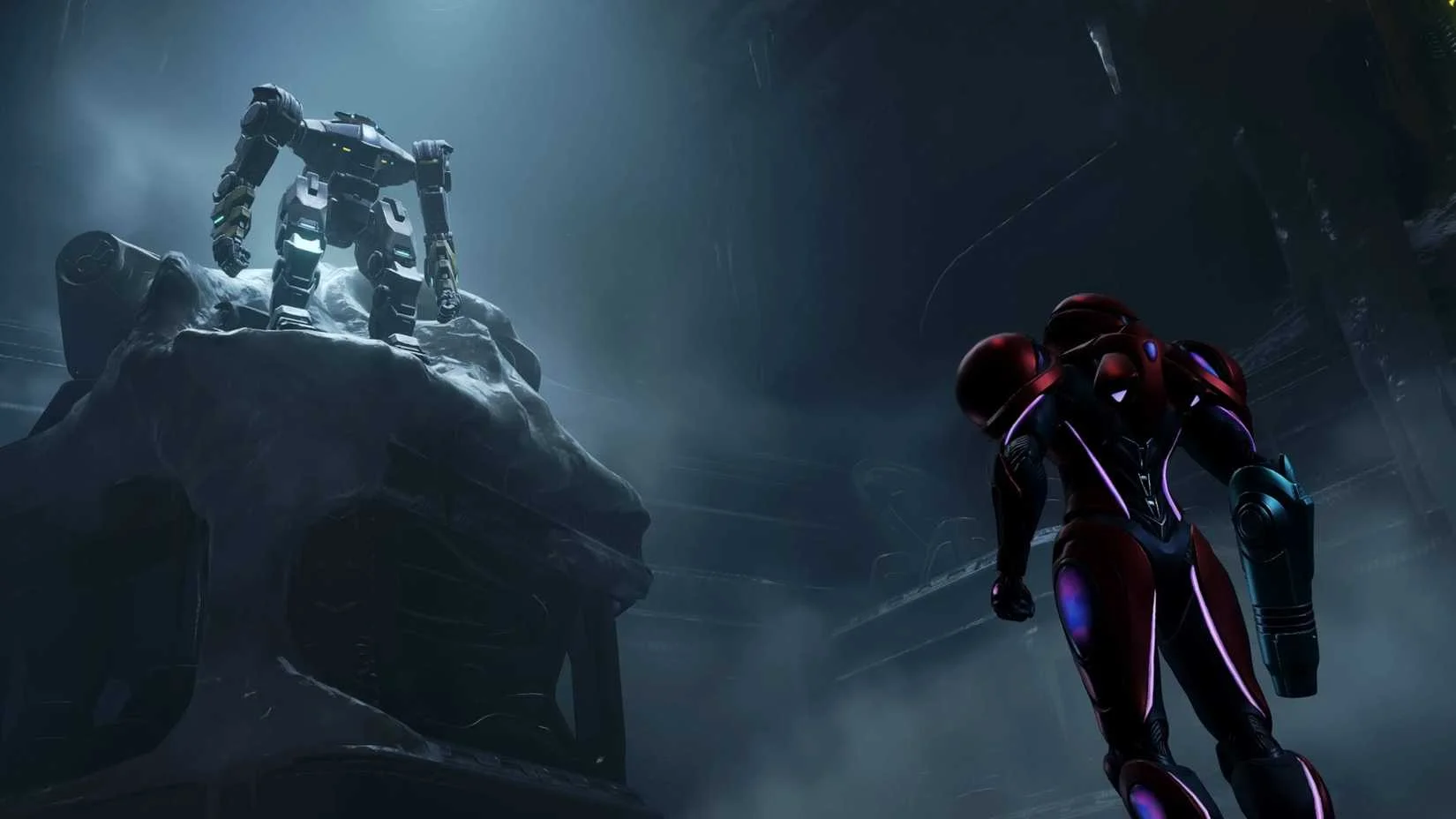
Metroid Prime 4’s Most Divisive Feature Was Locked in by Time, Not Taste
Metroid Prime 4: Beyond was always going to carry more baggage than a normal sequel. It was teased back in 2017, restarted partway through development, and then vanished long enough to become a punchline. By the time it finally landed on Switch 2 in late 2025, the series hadn’t had a mainline Prime entry in nearly two decades.
So when players discovered that its “big modern twist” on the formula was a semi-open desert hub that felt weirdly rigid compared to other contemporary games, disappointment was loud and immediate.
Now the team has essentially admitted what a lot of fans suspected: this wasn’t a bold creative stance so much as a design that got frozen in place by a brutal schedule. After years of delays and one full restart, resetting the world structure again was, in Nintendo’s own words, “out of the question.”
The result is a game built around 2017’s assumptions, released into a 2025 landscape.
How a Zelda-Style Ambition Turned Into a Compromise
When development originally kicked off, the team was looking straight at The Legend of Zelda: Breath of the Wild. That game didn’t just succeed; it rewired expectations for what a first-party Nintendo adventure could be.
Naturally, there was a desire to let Samus breathe in a similar way:
-
More freedom of approach
-
A larger, continuous world
-
Less “corridor into room into corridor” structure
But Metroid isn’t Zelda. Prime’s identity is built on:
-
Tight, looping level design
-
Gated progression through new suits and beams
-
Backtracking that reveals new paths in old spaces
If you give players too much freedom too early, those carefully tuned loops fall apart. The internal conclusion at the time was logical: full open world clashes with classic Metroid, so build a hybrid instead.
The Hybrid: A Hub Trapped Between Eras
Metroid Prime 4 settled on:
-
A large, semi-open desert hub on Viewros
-
A base camp to anchor progression
-
Linear, more traditional Prime-style areas branching off that hub
On paper, it’s a decent compromise: you get the fantasy of roaming a broad landscape, but core missions still funnel through crafted sequences that suit scanning, puzzle solving, and ability-based locks.
The problem is that while the game was being rebuilt at Retro Studios, player tastes kept moving. Open worlds got denser, more reactive, more seamless. By the time Prime 4 emerged, the genre bar wasn’t “Breath of the Wild, but with guns” anymore—it was games that blurred the line between authored and emergent spaces.
Nintendo has now acknowledged that by the time they realized “players’ impressions toward open-world games had changed,” the layout of Prime 4 was already too far along to tear down.
Why “Just Make It Open World” Wasn’t Actually Possible
From the outside, it’s easy to say, “They should’ve gone fully open.” But world structure isn’t a switch you flip late in development; it’s the skeleton everything else hangs from.
Systems That Were Already Bolted to the Hub
By the time Retro took stock, all of these systems were likely deeply tied to the hub-and-spoke design:
-
Quest and mission flow
-
Objectives are written around returning to camp, reentering specific regions, and unlocking them in a set order.
-
-
Ability and item progression
-
The classic Metroid rhythm—get tool, backtrack, open new path—depends on choke points and controlled access.
-
-
Enemy placement and encounter pacing
-
Combat setups assume certain approach angles and movement constraints.
-
-
Streaming and performance budgets
-
A big continuous open world stresses memory and streaming differently than a central hub feeding discreet zones.
-
Reworking that isn’t just “move some walls and add a few caves.” You’re talking about:
-
Rebuilding large chunks of level geometry
-
Rewriting quest chains
-
Retuning the economy, collectibles, and traversal
-
Retesting the entire game loop for sequence breaks and softlocks
After already restarting the project once, doing that again would push release years further out. At some point, Nintendo clearly decided that risk—both financial and reputational—was worse than launching with a structure that might feel last-gen.
How It Feels to Play: Nostalgia vs. Frustration
Players’ reactions to the final result have been split, and you can see that in the numbers. Prime 4 is still broadly liked, but it trails every mainline entry in both critic and user scores. The common complaint isn’t that it’s bad, it’s that it feels like a throwback that never fully commits.
For Series Veterans
For longtime fans, the layout has a familiar comfort:
-
The base camp evokes the safe zones of earlier games.
-
Spoke areas feel like classic Prime biomes: dense, atmospheric, looping back on themselves.
-
Upgrades still meaningfully change how you parse each zone.
The problem is that the hub constantly reminds you of what the game could have been. Crossing the desert between spokes can feel like filler, not adventure—especially on repeat trips. Once the novelty of the bike and psychic traversal tricks fades, you’re left with long stretches of nagging emptiness.
For Newer Players Raised on Modern Open Worlds
For players arriving from games that reshaped the genre, the friction is sharper:
-
Large areas that look open but behave like throughput corridors
-
Plenty of invisible walls, blocked routes, and “come back later” prompts
-
A central hub that functions more like a menu in disguise than a living ecosystem
That’s how you get criticisms that the open-world element feels “outdated”: not because Prime 4 ignores modern trends, but because it adopts the surface without fully embracing the underlying design philosophy.
The Design Lesson Hiding in the Controversy
Ironically, the messy compromise in Metroid Prime 4 highlights a clear lesson for Nintendo’s future: you can’t safely aim for the “middle” between classic gating and full freedom anymore. Players have lived on both extremes—hand-crafted linear experiences and sprawling do-what-you-want sandboxes. Half measures stand out.
For Metroid specifically, that suggests two viable paths going forward:
1. Double Down on Metroid’s Roots
-
Own the fact that Metroid is about tightly authored spaces, not boundless exploration.
-
Build something closer to Prime 1’s interconnected labyrinths than to a modern sandbox.
-
Push depth, density, and reactivity inside smaller spaces instead of chasing raw landmass.
This would mean marketing future games as deliberate, methodical sci-fi horror adventures, not pseudo-open-worlds.
2. Commit to a Fully Rethought Metroid Open World
If Nintendo really wants a Metroid that sits next to Breath of the Wild on the shelf, it has to start from that premise on day one:
-
Movement and combat tailored to wide-open spaces.
-
Ability gating that works in a non-linear world—more systemic, less door-key.
-
Storytelling that can handle players arriving at key beats in unpredictable order.
That kind of shift can’t be bolted onto a game mid-development; it has to be baked into the vision from the pitch stage, not retrofitted after a restart.
What This Means for Metroid Prime 5
Rumors are already swirling that the next Prime entry is at least in planning. If Metroid Prime 4 is the “caught between eras” game, Prime 5 needs to be the statement of intent.
Nintendo now knows, in painful detail, that:
-
Shooter and action players expect faster pacing than they did in 2017.
-
Open worlds are judged not only on size, but on how alive and reactive they feel.
-
Nostalgia can carry atmosphere and tone, but not entire structure, forever.
The next step is choosing what Metroid is going to be in the 2030s. A claustrophobic, brutally curated sci-fi labyrinth? Or a genuinely modern open-structure adventure that keeps the series’ mood while finally letting go of its old scaffolding?
Metroid Prime 4: Beyond is a fascinating case study in what happens when a development timeline collides with shifting player expectations. It’s not a disaster—but it is a reminder that in 2025, one restart too many can lock you into a design that the industry has already moved past.